Commercial Wash Systems for Trucks, Tractors, Trailers, and Transportation Fleets
Truck & Trailer Wash Systems
Pro-Tech Service provides truck and trailer wash systems designed for commercial transportation operations that need dependable, repeatable vehicle cleaning.
From tractors and box trucks to trailers and large fleet vehicles, commercial trucks present different cleaning challenges than standard passenger vehicles.
Vehicle length, height, wheel configuration, aerodynamic components, mirrors, fuel tanks, undercarriages, trailers, and heavy road contamination all affect how a wash system should be designed.
Pro-Tech Service can help with new installations, existing truck wash upgrades, equipment replacement, preventive maintenance, repairs, and ongoing technical support.
Truck Wash Systems Built Around Your Operation
Commercial trucks encounter road film, mud, salt, grease, and other contaminants during daily operation. An effective truck wash system must provide consistent cleaning while accommodating different vehicle sizes and fleet requirements.
Pro-Tech Service provides wash system solutions for semi-trucks, tractor-trailers, box trucks, delivery vehicles, commercial vans, flatbed trucks, utility trucks, and other commercial fleet equipment.
What We Evaluate for a Truck Wash
Pro-Tech Service evaluates vehicle dimensions, fleet size, daily wash volume, cleaning requirements, and available space to determine the right wash system. We also consider vehicle flow, water and electrical needs, drainage, chemical delivery, and equipment maintenance.
Our goal is to develop a reliable wash system that supports efficient daily operations and long-term fleet growth.
Truck Wash System Options
Truck fleets can be cleaned using friction, touchless, hybrid, or manually assisted equipment.
The appropriate system depends on the vehicles, contaminants, wash frequency, and level of automation required.
Touchless Truck Wash Systems
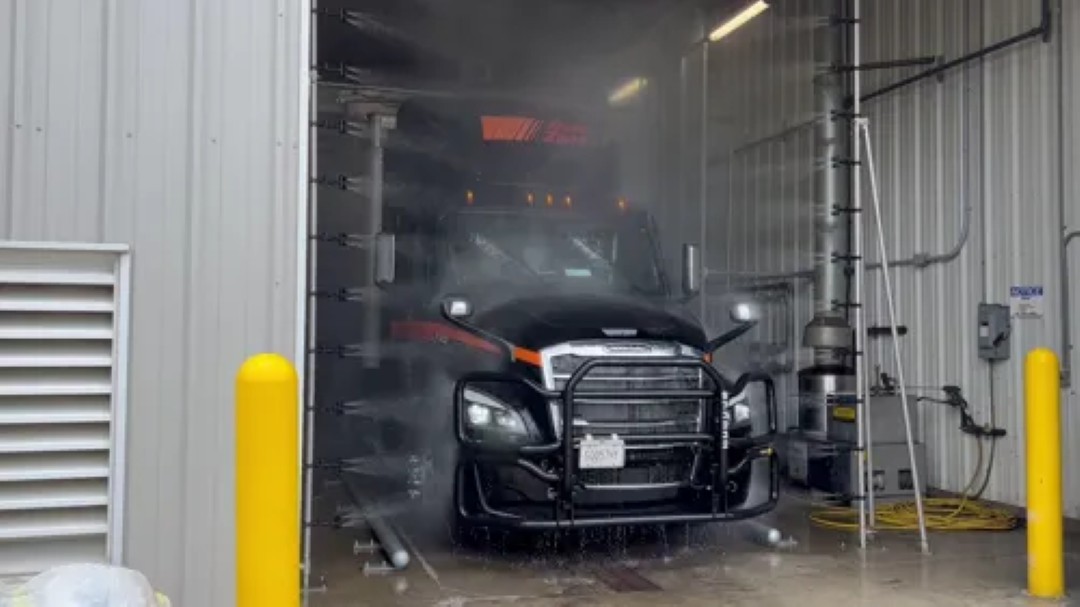
Touchless systems use chemicals and high-pressure water to clean vehicles without brushes making direct contact with the exterior. They may be useful for irregular body shapes, extensive graphics, exterior accessories, specialized configurations, and operations that prefer to avoid brush contact.
Friction Truck Wash Systems
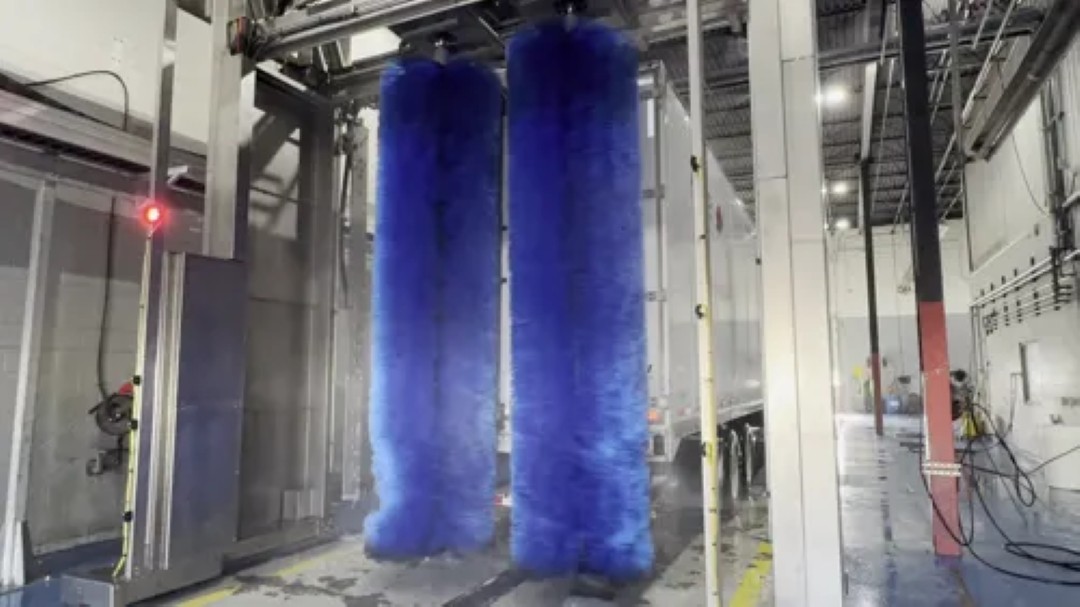
Friction systems use rotating brushes or wash materials to physically clean compatible vehicle surfaces. The mechanical cleaning action can help remove road film and heavy surface contamination. Vehicle compatibility must be evaluated before friction equipment is selected.
Hybrid Truck Wash Systems
Hybrid systems combine high-pressure touchless cleaning with friction equipment. This approach can help clean broad vehicle surfaces, wheels, lower panels, undercarriages, areas around truck components, and difficult-to-reach areas.
Drive-Through Truck Wash Systems
These systems may be appropriate for commercial fleets that need efficient vehicle cleaning without unnecessary delays, including trucking terminals, distribution centers, delivery companies, logistics operations, municipal facilities, rental fleets, and service fleets.
Rollover Truck Wash Systems
In a rollover or gantry system, the vehicle remains stationary while the wash equipment moves around it. These systems may include vehicle-profile detection, high-pressure sprays, vertical brushes, overhead cleaning equipment, presoak application, multiple wash passes, wheel cleaning, and final rinsing.
A rollover configuration may be useful for facilities that need an automated wash process but do not have enough space for a larger tunnel or drive-through system.
Rollover Truck Wash Systems
In a rollover or gantry system, the vehicle remains stationary while the wash equipment moves around it. This can provide an automated wash process within a dedicated bay.
Truck rollover systems may include:
- Vehicle-profile detection
- High-pressure spray
- Vertical brushes
- Overhead equipment
- Presoak application
- Multiple wash passes
- Wheel cleaning
- Final rinse
A rollover configuration may be useful when the site does not have enough depth for a larger tunnel or drive-through system.
Tractor Wash Systems
Tractor wash systems are designed to clean areas such as cab sides, front surfaces, mirrors, fuel tanks, steps, wheels, lower body sections, chassis, and rear cab areas.
Equipment should be configured around the tractor’s profile and external components, using touchless, friction, or hybrid cleaning methods depending on the fleet’s needs.
Tractor Wash Systems
Tractors require cleaning around areas such as:
- Cab sides
- Front surfaces
- Mirrors
- Fuel tanks
- Steps
- Wheels
- Lower body
- Chassis
- Rear cab areas
Equipment should be configured around the tractor profile and external components. Touchless, friction, or hybrid cleaning may be used depending on the fleet.
Trailer Wash Systems
Trailers present large exterior surfaces that can accumulate significant road film and dirt.
Wash systems can be configured for dry van trailers, refrigerated trailers, flatbed trailers, specialty trailers, fleet trailers, and box-style commercial trailers.
Exterior trailer washing may include side, front, rear, roof or upper-area cleaning where appropriate, wheel cleaning, lower-panel cleaning, undercarriage cleaning, and a final rinse.
Trailer dimensions, construction, accessories, and graphics should be considered during system design.
Box Truck Wash Systems
Box trucks are common in delivery, distribution, rental, and service operations. Their relatively large exterior surfaces can benefit from a consistent automated wash process.
Systems can be designed around cab cleaning, box sides, front and rear surfaces, wheels, lower panels, and underbody areas.
A wash configuration may need to accommodate different box heights and vehicle lengths when the fleet includes multiple truck models.
Delivery and Distribution Fleet Wash Systems
Delivery fleets often operate on tight schedules. Vehicles may return to the facility late in the day and need to be ready for another route shortly afterward.
A dedicated truck wash system can help create a predictable wash process for delivery vans, box trucks, step vans, straight trucks, tractors, and trailers.
Vehicle flow and wash-cycle time should be planned around dispatch and loading schedules.
Trucking and Logistics Fleet Wash Systems
Transportation fleets may operate a large number of tractors and trailers across long distances.
A commercial fleet wash system can help support consistent fleet appearance, routine cleaning schedules, reduced dependence on manual washing, higher vehicle throughput, and more predictable wash processes.
A system may be installed at transportation terminals, distribution centers, maintenance facilities, fleet yards, logistics hubs, and private truck facilities.
Wheel and Tire Cleaning
Truck wheels and tires can accumulate heavy road grime, mud, salt, brake residue, and other contaminants.
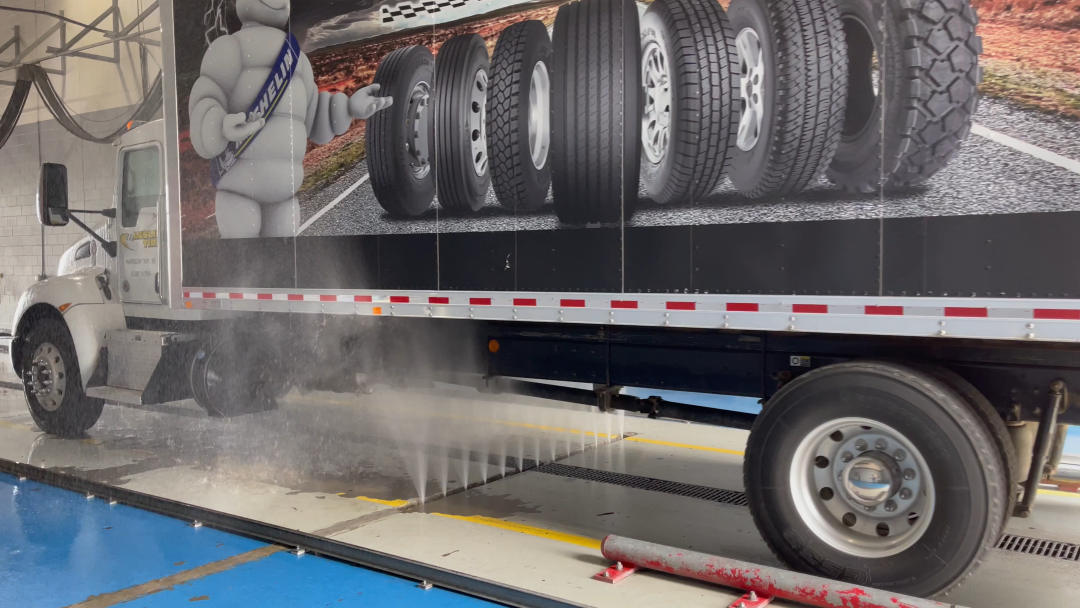
Wheel-cleaning equipment may include high-pressure wheel spray, wheel brushes, tire cleaning, side-mounted spray, and lower-body cleaning.
The right equipment depends on wheel configuration, axle arrangement, vehicle size, and contaminants.
Undercarriage and Chassis Wash Systems
Commercial trucks operate close to the road and may accumulate contaminants underneath the vehicle.
Undercarriage cleaning can help address mud, salt, road debris, construction material, dirt, and other lower-vehicle contamination.
Undercarriage systems may use drive-over spray manifolds, high-pressure nozzles, fixed spray systems, chassis wash equipment, and wheel and axle cleaning.
This equipment may be integrated into a larger wash system or installed as a standalone cleaning stage.
Heavy-Duty Cleaning Requirements
Some truck fleets operate in more demanding environments, including construction, waste services, utilities, industrial operations, oil and energy, municipal services, agriculture, and material transport.
These vehicles may require additional cleaning stages or specialized equipment, including high-pressure cleaning, multiple chemical applications, degreasing, mud removal, wheel cleaning, chassis cleaning, undercarriage washing, and manual-assist equipment.
The wash process should be developed around the contaminants actually encountered by the fleet.
Truck Wash Chemical Systems
Chemistry is an important part of commercial truck washing.
A properly designed chemical system may use presoak detergents, low-pH cleaners, high-pH cleaners, degreasers, bug-removal products, wheel cleaners, salt-neutralizing products, rinse aids, and protectants.
Chemical selection should consider vehicle surfaces, paint, aluminum, graphics, chrome, polished components, water quality, contaminants, and equipment compatibility.
Accurate chemical delivery helps maintain consistent wash performance while controlling chemical usage.
Water Treatment and Reclaim
Truck wash facilities may use a significant amount of water depending on system size and wash volume.
Supporting equipment may include water reclaim systems, filtration, settling systems, storage tanks, oil-water separation, water softening, reverse osmosis, spot-free rinse, fresh-water final rinse, and pump systems.
Water-system design depends on the facility, contaminants, wash chemistry, local requirements, and intended level of water reuse.
New Truck Wash Installation
A new commercial truck wash requires coordination between the wash equipment, property, utilities, drainage, and fleet operations. Pro-Tech Service can assist throughout the project.
New Truck Wash Installation
A new commercial truck wash requires coordination between the wash equipment, property, utilities, drainage, and fleet operations. Pro-Tech Service can assist throughout the project.
Fleet Evaluation
We review the vehicle types, dimensions, wash frequency, and operating requirements.
System Selection
Equipment is evaluated based on fleet size, vehicle configuration, wash volume, cleaning requirements, available space, desired automation, maintenance requirements, and budget.
Site Planning
The facility must accommodate vehicle approach, clearance, equipment placement, driver guidance, entry and exit, drainage, chemical storage, utility connections, equipment rooms, and maintenance access.
Installation Coordination
Pro-Tech Service works with contractors, equipment providers, facility representatives, and other project stakeholders to coordinate installation requirements.
Setup and Testing
The equipment is configured and tested for vehicle clearance, chemical delivery, pressure, spray coverage, brush contact where applicable, sensors, controls, wash-cycle timing, and rinse performance.
Ongoing Service
After installation, Pro-Tech Service remains available for preventive maintenance, equipment repair, troubleshooting, parts, and system updates.
Upgrading an Existing Truck Wash
An existing truck wash can often be improved without replacing the entire facility. Upgrades may include replacing aging equipment, adding high-pressure sprays, updating brushes and controls, improving vehicle detection, chemical delivery, pumps, wheel and undercarriage cleaning, and rinse systems. Additional improvements may involve water treatment, water reclaim, electrical components, vehicle clearance, and maintenance access.
Pro-Tech Service can evaluate the existing wash system and help identify improvements based on operational value and equipment condition.
Upgrading an Existing Truck Wash
An existing truck wash can often be improved without replacing the entire facility.
Possible upgrades include:
- Replacing aging wash equipment
- Adding high-pressure spray
- Replacing brushes
- Updating controls
- Adding vehicle detection
- Improving chemical delivery
- Replacing pumps
- Improving wheel cleaning
- Adding undercarriage wash
- Increasing vehicle clearance
- Improving rinse systems
- Adding water treatment
- Installing water reclaim
- Updating electrical components
- Improving maintenance access
Pro-Tech Service can evaluate the existing wash system and help identify improvements based on operational value and equipment condition.
Truck Wash Preventive Maintenance and Repair
Unexpected equipment failures can disrupt fleet operations and create vehicle backups. Preventive maintenance helps identify developing problems before they cause extended downtime.
Pro-Tech Service provides truck wash maintenance and repair for pumps, motors, brushes, bearings, gearboxes, spray systems, high-pressure equipment, chemical delivery, valves, sensors, controls, electrical components, wheel-cleaning equipment, undercarriage systems, water-treatment equipment, and reclaim equipment.
Our team focuses on identifying the cause of the problem and restoring reliable system operation.
Why Work With Pro-Tech Service?
Commercial Fleet Experience
Truck washing requires equipment designed around larger vehicles and more demanding operating conditions.
Practical System Planning
We evaluate systems based on actual fleet requirements rather than selecting equipment in isolation.
New Installations and Existing Systems
Pro-Tech Service supports new construction, replacement projects, upgrades, expansions, and existing truck wash facilities.
Touchless, Friction, and Hybrid Options
Different fleets require different cleaning approaches. We help determine which configuration is appropriate for the vehicles and facility.
Long-Term Equipment Support
We remain available after installation for maintenance, troubleshooting, repairs, parts, and system updates.
Focus on Reliability
System recommendations consider wash performance, equipment durability, maintenance access, and the operational impact of downtime.
Plan Your Truck & Trailer Wash System
The right truck wash system depends on your vehicle types, fleet size, contaminants, available space, wash frequency, operating schedule, and long-term maintenance requirements.
Pro-Tech Service can help you evaluate your options and develop a system around the way your transportation operation actually works.
Whether you are planning a new truck wash facility, replacing manual washing, upgrading existing equipment, or expanding capacity, our team is ready to help.
FAQ
The right system depends on the trucks being washed, fleet size, vehicle configuration, contaminants, wash volume, site layout, and desired level of automation.
Touchless, friction, and hybrid systems may all be appropriate depending on the application.
Yes. Systems can be configured to accommodate tractors, trailers, or complete tractor-trailer combinations depending on equipment design and facility size.
Yes. Box truck wash systems can be designed around the cab, cargo body, wheels, lower panels, and vehicle height.
Potentially. The wash process should consider the type and condition of graphics, cleaning chemicals, pressure, brush contact, and manufacturer recommendations.
Yes. Undercarriage and chassis cleaning can be incorporated into the wash system.
Yes, depending on the equipment. Mixed fleets may require adjustable components, sensors, programmable wash cycles, or separate procedures for specialized vehicles.
Yes. Existing truck wash systems may be improved with updated controls, pumps, brushes, spray equipment, chemical systems, wheel cleaning, undercarriage cleaning, water reclaim, and other upgrades.
Yes. Pro-Tech Service provides maintenance, troubleshooting, repairs, parts, and technical support for commercial truck wash systems.
Cost depends on the system type, vehicle dimensions, automation level, wash equipment, site conditions, supporting water systems, construction requirements, and installation scope.
A fleet and facility evaluation is necessary to develop an accurate recommendation.
Client success stories
This is a top notch car wash service company that caters to their customers. Whether your experiencing automatic car wash problems to needing new equipment they will be there for you and assure your s…
Read MoreIf you own or operate an automated car wash, I highly recommend getting to know this amazing group of people. Service techs are top notch, back office people are great, they can troubleshoot, repair, …
Read MoreAdd a review:

