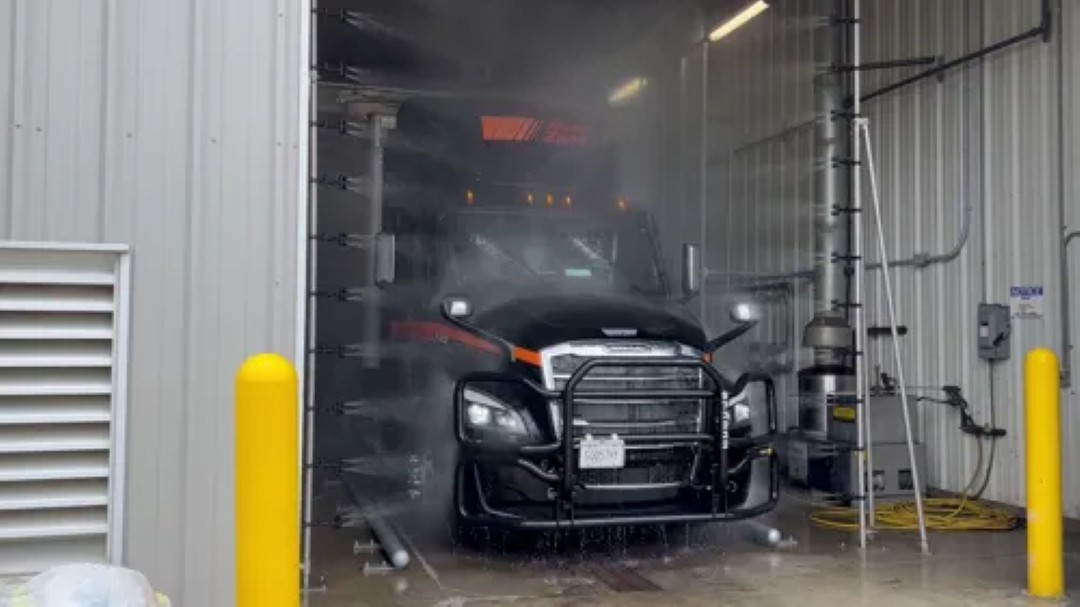
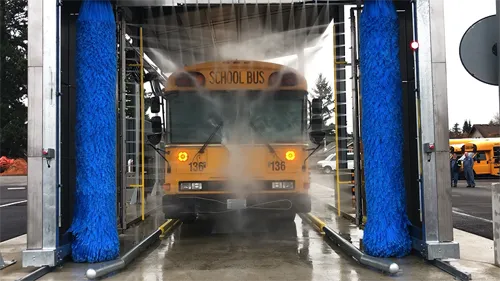
Touchless Fleet Wash Systems

Dependable Touch-Free Cleaning for Commercial Vehicle Fleets

Pro-Tech Service provides touchless fleet wash systems designed around your vehicles, facility, wash frequency, operating schedule, and long-term maintenance requirements. Touchless systems use carefully controlled chemical applications, water pressure, spray coverage, and rinse stages to clean vehicle exteriors without relying on brushes or other wash materials that make direct contact with the vehicle. These systems can be configured for commercial trucks, delivery vehicles, service fleets, buses, municipal vehicles, emergency vehicles, utility vehicles, vans, pickups, trailers, and other specialized equipment. Whether you are developing a new fleet wash facility, replacing a labor-intensive manual process, or upgrading an existing wash bay, Pro-Tech Service can help you evaluate, install, and support a system that fits your operation.

Touchless Fleet Washing Built Around Your Operation

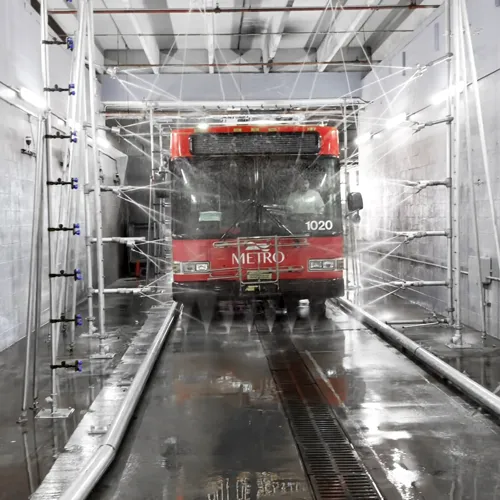
Tunnel Transit Wash System for High-Volume Fleet Cleaning

Fleet washing presents different challenges than washing standard passenger vehicles.

Commercial vehicles may vary significantly in height, length, body configuration, surface material, attachments, mirrors, ladders, utility bodies, graphics, and specialized equipment. A fleet wash system must account for those differences while providing consistent cleaning coverage and dependable daily operation.

Pro-Tech Service helps organizations develop practical touchless wash solutions based on factors such as:

  • Types and sizes of vehicles
  • Number of vehicles washed per day
  • Frequency of washing
  • Soil and contaminant conditions
  • Available wash-bay space
  • Vehicle entry and exit flow
  • Water, electrical, drainage, and utility requirements
  • Chemical storage and delivery
  • Undercarriage and wheel-cleaning needs
  • Water treatment or reclaim requirements
  • Equipment access for maintenance
  • Future fleet growth

The objective is not simply to install wash equipment. It is to develop a complete system that supports efficient vehicle movement, consistent cleaning, practical maintenance, and long-term equipment reliability.

What Is a Touchless Fleet Wash System?

A touchless fleet wash system cleans vehicles without brushes, cloth, or other mechanical wash materials contacting the vehicle exterior.

Instead, the system uses a planned combination of:

  • Presoak or detergent application
  • High-pressure water
  • Strategically positioned spray nozzles
  • Multi-stage chemical applications
  • Side, overhead, wheel, and undercarriage coverage
  • High-volume rinsing
  • Spot-free rinse options
  • Vehicle-detection sensors
  • Automated controls

The exact cleaning process depends on the equipment configuration, vehicle types, operating environment, and contaminants being removed.

Touchless technology can be particularly valuable for fleets with vehicle graphics, irregular body shapes, exposed accessories, specialty equipment, delicate surfaces, or components that may not be appropriate for traditional brush systems.

Benefits of Touchless Fleet Washing

Fleet vehicle wash systems can be designed for a wide range of commercial, municipal, transportation, and service organizations.

No Brush Contact

Touchless systems clean without rotating brushes or cloth contacting the vehicle. This can help reduce concerns involving brush wear, snagging, surface contact, and contact with external vehicle components.

Accommodates Different Vehicle Profiles

Commercial fleets often include multiple vehicle types. A properly planned touchless system can be configured to wash vehicles with varying heights, lengths, widths, body styles, and equipment layouts.

Consistent Wash Processes

An automated system applies chemicals, pressure, and rinse stages according to programmed cycles. This helps establish a more repeatable process than relying entirely on different employees and manual washing techniques

Reduced Dependence on Manual Labor

Touchless automation can reduce the amount of direct labor required for routine exterior washing. Employees can focus on vehicle preparation, inspection, difficult problem areas, interior cleaning, or other operational responsibilities.

Faster Fleet Turnaround

A dedicated wash process can help vehicles move through the facility more efficiently than unstructured manual washing. Actual throughput will depend on the equipment configuration, wash program, vehicle size, and level of cleaning required.

Improved Fleet Presentation

Clean vehicles reinforce a professional appearance for customers, employees, and the public. This is especially important for branded delivery vehicles, service fleets, transit systems, municipal departments, dealerships, rental fleets, and customer-facing operations.

Configurable Cleaning Coverage

Touchless systems can be designed with targeted applications for vehicle sides, roofs, wheels, tires, lower panels, chassis areas, and undercarriages.

Reduced Brush Maintenance

Because touchless systems do not depend on wash brushes, operators do not have to manage brush adjustment, brush replacement, or direct-contact cleaning material in the same way they would with friction equipment.

Touchless Fleet Wash System Configurations

The right configuration depends on vehicle volume, facility space, fleet composition, labor availability, and operational requirements.
Pro Tech Service - Dealership Municipality drive thru car wash tunnel entrance

Touchless Drive-Through Fleet Wash Systems

In a drive-through system, the vehicle moves through a series of stationary wash components.

Depending on the system design, the wash process may include:

  • Vehicle detection
  • Presoak application
  • High-pressure side cleaning
  • Overhead cleaning
  • Wheel and lower-panel cleaning
  • Undercarriage rinsing
  • Final rinse
  • Spot-free rinse
  • Drying or blow-off equipment

Drive-through systems can support operations that need vehicles to move through the wash area efficiently and return to service with minimal interruption.

These systems may be appropriate for:

  • Delivery fleets
  • Service companies
  • Municipal facilities
  • Public works departments
  • Transit operations
  • Trucking companies
  • Rental fleets
  • Distribution centers
  • Utility companies

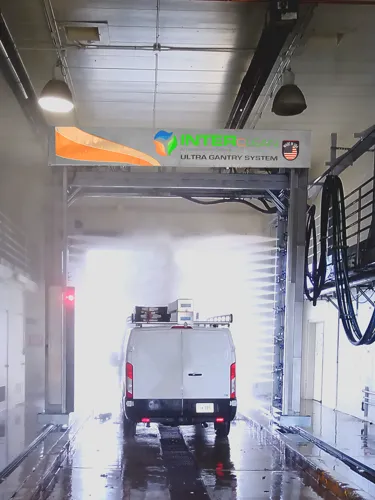
Touchless Rollover and Gantry Systems

With a rollover or gantry configuration, the vehicle remains stationary while the wash equipment moves around or alongside it.

These systems can be useful when the facility has a dedicated wash bay or when the operator wants a controlled automated cycle without requiring a long wash tunnel.

A rollover system may be configured to:

  • Detect vehicle dimensions
  • Apply detergent or presoak
  • Make multiple cleaning passes
  • Adjust spray coverage
  • Clean vehicle sides and roof areas
  • Apply a final rinse
  • Complete specialized wash programs

Rollover systems may be suitable for mixed fleets, dealerships, municipal facilities, service vehicles, buses, trucks, vans, and operations with limited site depth.

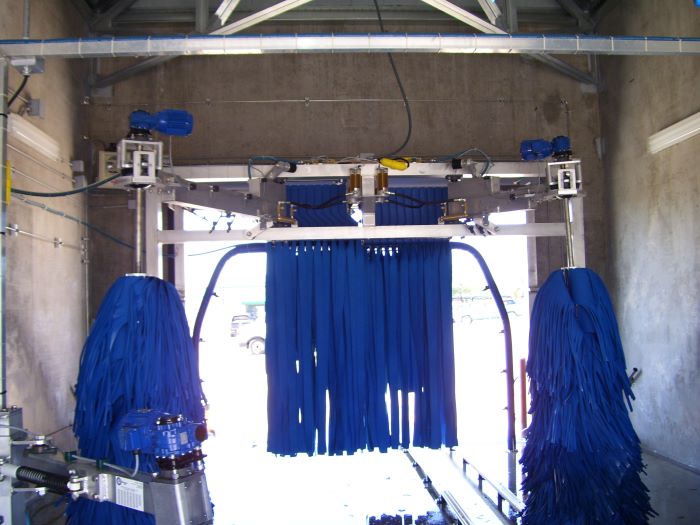
Fleet Wash Drying Stage with Soft Bristle Roller System
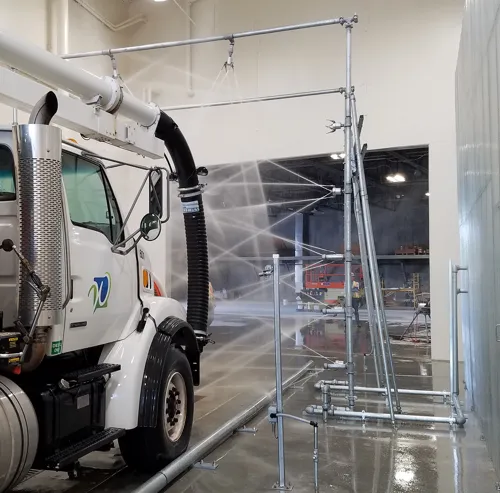
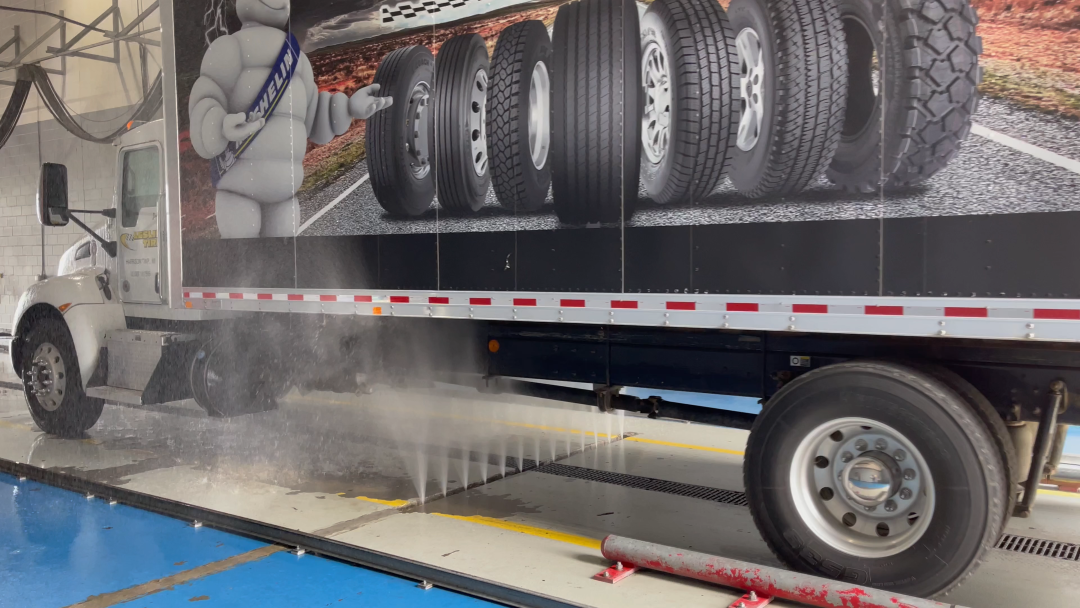
Truck Fleet Wash System with Full Exterior Cleaning Process

In-Bay Touchless Fleet Wash Systems

An in-bay touchless system washes the vehicle while it remains inside a designated bay.

This format may work well for smaller fleets, lower-volume facilities, existing maintenance buildings, dealerships, rental operations, and companies converting a manual wash bay into an automated system.

The bay can be designed around the largest vehicle that will regularly use the system while maintaining adequate clearance for equipment, utilities, drainage, and service access.

Touchless Tunnel Wash Systems

A tunnel system can combine several cleaning stages to support higher vehicle volume.

Touchless tunnel components may include:

  • Chemical application arches
  • High-pressure spray arches
  • Oscillating spray systems
  • Wheel and tire cleaning
  • Undercarriage wash equipment
  • Rinse arches
  • Spot-free rinse
  • Drying equipment
  • Vehicle-guidance systems
  • Automated controls

Tunnel configurations require careful planning to ensure that vehicle spacing, wash coverage, equipment timing, and site flow support the intended fleet operation.

Tunnel Transit Wash System for High-Volume Fleet Cleaning
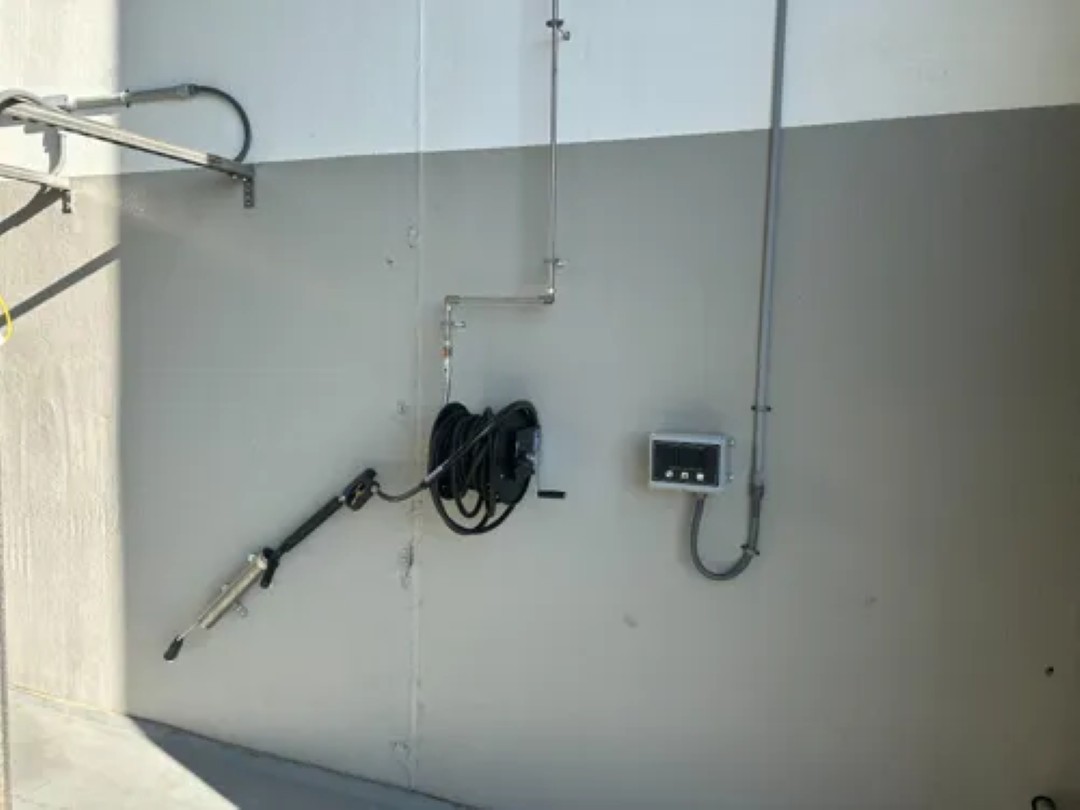
Manual Spray Hose Station with Control Panel in Wash Bay

Manual-Assist Touchless Systems

Not every operation requires a fully automated installation.

A manual-assist system can provide professional chemical application and high-pressure cleaning equipment while allowing an operator to direct the wash process.

These systems may include:

  • Walkaround spray equipment
  • Hose-boom systems
  • High-pressure wash guns
  • Chemical application controls
  • Wall-mounted control stations
  • Mobile wash equipment
  • Undercarriage cleaning
  • Spot-free rinse

Manual-assist systems can be appropriate for smaller fleets, irregular vehicles, specialized equipment, lower wash volumes, or facilities that need greater operator control.

Preferred Vendors and Manufacturing Allies

Fleet Vehicles and Applications

Touchless fleet wash equipment can be configured for a wide range of vehicle types and industries.

Delivery and Distribution Fleets

Delivery vehicles operate frequently and often serve as moving representations of the company. Touchless systems can support routine cleaning of delivery vans, box trucks, tractors, trailers, and last-mile delivery vehicles.

Service and Utility Fleets

Plumbing, electrical, telecommunications, HVAC, utility, construction, and field-service vehicles may include ladders, racks, utility bodies, external storage, graphics, and specialized equipment. Touchless washing can help clean these vehicles without relying on rotating brushes around exterior components.

Municipal and Government Fleets

Cities, counties, public works departments, parks departments, sanitation operations, and other government organizations may operate a mixture of pickups, vans, utility vehicles, dump trucks, service trucks, and specialized equipment. A fleet wash system can be planned around the department’s vehicle mix, available facility space, cleaning requirements, and operating schedule.

Transit and Bus Fleets

Transit vehicles and buses require equipment designed around larger vehicle dimensions and frequent wash cycles. Touchless components may be incorporated for side, roof, front, rear, wheel, and undercarriage cleaning.

Emergency and Public-Safety Vehicles

Fire departments, emergency medical services, law-enforcement agencies, and other public-safety organizations need systems that account for vehicle graphics, warning equipment, accessories, and specialized exterior components.

Trucking and Transportation Fleets

Touchless systems can be configured for tractors, box trucks, straight trucks, trailers, flatbeds, tankers, and other commercial vehicle profiles. Because truck configurations can differ substantially, equipment layout and chemical selection must be developed around the actual vehicles and soil conditions.

Rental and Leasing Fleets

Rental companies and leasing operations need vehicles cleaned and returned to service efficiently. Automated touchless systems can support more consistent exterior cleaning while reducing dependence on manual washing.

Automotive Dealerships

Dealership fleets, service-loaner vehicles, commercial inventory, and customer vehicles may benefit from a touchless wash process that supports vehicle turnaround and presentation.

Waste and Environmental Service Fleets

Waste-management vehicles and environmental service equipment may require aggressive cleaning of exterior surfaces, wheels, lower panels, and chassis areas. These applications should be evaluated carefully to determine the appropriate pressure, chemicals, water systems, and cleaning stages.
  • Initial Consultation

    We review the fleet, facility, cleaning goals, current challenges, and expected wash volume.

  • Site Evaluation

    The property and wash area are evaluated for equipment fit, utilities, drainage, vehicle movement, and maintenance access.

  • Equipment Selection

    We help identify equipment options based on fleet type, wash requirements, available space, and operating goals.

  • Installation Coordination

    Our team coordinates with contractors, equipment providers, facility managers, and other project stakeholders.

  • Setup and Testing

    The system is configured, tested, and reviewed before entering regular operation.

  • Ongoing Support

    After installation, Pro-Tech Service remains available for maintenance, repairs, troubleshooting, and equipment upgrades.

Wheel, Tire, Chassis, and Undercarriage Cleaning

Dirt and contaminants are not limited to visible exterior panels.

Fleet vehicles can accumulate mud, road film, grease, debris, salt, construction material, and other contaminants around the wheels, lower body, chassis, and undercarriage.

Depending on the application, Pro-Tech Service can help incorporate:

  • Wheel-cleaning systems
  • Tire-cleaning applications
  • Lower-panel spray systems
  • High-pressure wheel wash equipment
  • Chassis wash systems
  • Undercarriage spray manifolds
  • Drive-over cleaning systems
  • Side-mounted high-pressure nozzles
  • Mud and debris removal stages

The appropriate equipment depends on the vehicle clearance, wheel configuration, contaminants, wash frequency, drainage system, and intended level of cleaning.

Commercial Trailer Washout Facility with Chemical Storage and Supply

Chemical Delivery and Wash Quality

Chemistry plays an important role in touchless fleet washing.

Without brush contact, the system must use properly selected chemical applications, dwell time, pressure, water temperature when applicable, and rinse coverage to loosen and remove surface contamination.

A touchless fleet wash may use:

  • Low-pH and high-pH cleaning stages
  • Presoak detergents
  • Degreasers
  • Bug-removal products
  • Wheel and tire cleaners
  • Salt-neutralizing products
  • Rinse aids
  • Protectants
  • Spot-free rinse water

Chemical selection should be based on vehicle surfaces, graphics, contaminants, water quality, environmental requirements, equipment compatibility, and manufacturer recommendations.

Pro-Tech Service can help evaluate the chemical delivery system and identify the equipment required for accurate, repeatable application.

Water Treatment and Reclaim Options

Water quality can affect chemical performance, equipment operation, spotting, and the final appearance of the vehicle.

Depending on the facility and project requirements, a fleet wash system may include:

  • Water softening
  • Reverse-osmosis systems
  • Spot-free rinse equipment
  • Water-storage tanks
  • Filtration
  • Settling or separation equipment
  • Oil-water separation
  • Water reclaim systems
  • Recycled-water delivery
  • Fresh-water final rinse
  • Pump and pressure controls

Water reclaim may help reduce fresh-water demand, but the system must be planned around the contaminants being removed, local requirements, wash chemistry, storage capacity, filtration needs, and intended reuse.

Pro-Tech Service can help coordinate supporting water equipment as part of the overall wash-system design.

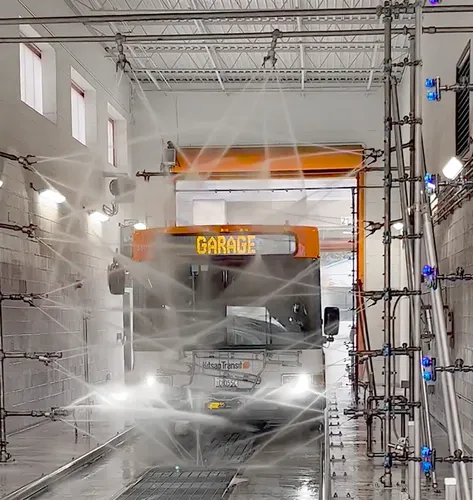
Modern Fleet Wash Tunnel with Efficient Water and Chemical Application

New Touchless Fleet Wash Installation

A new fleet wash installation requires coordination between the equipment, building, utilities, drainage, vehicle flow, and operational requirements.

Pro-Tech Service can assist throughout the process.


1.

Fleet and Facility Evaluation

We review the vehicle types, wash frequency, expected volume, available space, existing utilities, operating schedule, and maintenance requirements.
2.

Equipment and System Planning

We help identify a touchless configuration that aligns with the fleet, facility, cleaning expectations, and available budget.

3.

Site and Wash-Bay Layout

The wash area must provide sufficient clearance, vehicle guidance, drainage, equipment placement, chemical storage, control access, and maintenance space.

4.

Utility Coordination

Fleet wash equipment may require coordination involving water supply, electrical service, draining, compressed air, healing, chemical storage, equipment-room space, water treatment, reclaim equipment, and ventilation.

5.

Installation Coordination

Our team works with facility representatives, contractors, equipment manufacturers, and project stakeholders to coordinate equipment installation and startup requirements.
6.

Equipment Setup and Testing

The system is configured and tested to review chemical application, pressure, spray coverage, controls, sensors, vehicle clearance, wash cycles, and overall operation.

7.

Training and Ongoing Support

Operators should understand the equipment, wash programs, routine inspections, chemical handling, basic maintenance, and procedures for reporting equipment problems.

After installation, Pro-Tech Service remains available for parts, preventive maintenance, troubleshooting, repairs, and system updates.

Upgrading an Existing Fleet Wash

A complete facility replacement may not be necessary.

Existing fleet wash systems can often be improved through targeted equipment and control upgrades.

Potential upgrades may include:

  • Converting from manual washing to automation
  • Adding touchless wash arches
  • Replacing outdated pumps
  • Improving pressure and spray coverage
  • Updating chemical-delivery equipment
  • Replacing controls and sensors
  • Adding vehicle-detection technology
  • Improving wheel and undercarriage cleaning
  • Adding spot-free rinse
  • Installing water-treatment equipment
  • Incorporating water reclaim
  • Improving drainage and sediment management
  • Adding drying equipment
  • Expanding the wash bay
  • Increasing vehicle clearance
  • Improving equipment-service access

Pro-Tech Service can evaluate the current wash process and help identify which improvements are likely to provide the greatest operational value.

Preventive Maintenance and Fleet Wash Repair

Fleet operations depend on predictable vehicle availability. A wash-system failure can interrupt cleaning schedules, create vehicle backups, and force employees to return to manual washing.

Preventive maintenance helps identify developing equipment problems before they result in extended downtime.

Pro-Tech Service provides maintenance and repair support for components such as:

  • Pumps and motors
  • High-pressure systems
  • Spray nozzles
  • Chemical-delivery equipment
  • Sensors and controls
  • Electrical components
  • Water-treatment systems
  • Reclaim equipment
  • Valves and manifolds
  • Hoses and fittings
  • Vehicle-detection equipment
  • Control panels
  • Undercarriage systems
  • Drying equipment
  • Supporting wash-bay components

Our team focuses on identifying the cause of the problem, restoring dependable operation, and reducing repeated equipment failures.

Modern Fleet Wash Tunnel with Efficient Water and Chemical Application

Why Work With Pro-Tech Service?

  • Complete System Support

    Pro-Tech Service supports fleet wash projects from initial planning and equipment selection through installation, maintenance, repairs, parts, and ongoing technical service.

  • Experience With Large and Specialized Vehicles

    Commercial fleets require different equipment, clearances, wash coverage, and operating processes than standard passenger-car washes. We help account for those differences during system planning.

  • Practical Equipment Recommendations

    We evaluate equipment based on the actual vehicles, site conditions, wash requirements, maintenance needs, and operational goals.

  • Support for New and Existing Facilities

    Our team assists with new wash developments, existing-bay conversions, equipment replacements, upgrades, expansions, and ongoing service.

  • Long-Term Serviceability

    Wash performance is only part of the decision. Equipment must also be accessible for inspection, adjustment, repair, and replacement.

  • Parts, Maintenance, and Repair

    Pro-Tech Service remains available after installation to help maintain equipment performance and address system problems.

  • Focus on Reliable Operation

    Every recommendation considers equipment durability, service access, wash consistency, maintenance requirements, and the impact of downtime on the fleet.

Client success stories

Pro-Tech Service Company stands out with our 40 years of combined experience, dedication to customer service, and extensive parts inventory. We not only provide expert installation services but also offer ongoing maintenance and support to ensure your car wash remains profitable and efficient.

Add a review:

    Plan Your Fleet Vehicle Wash System

    Ready to Optimize Your Fleet Vehicle Wash System?

    The right fleet wash system should improve vehicle readiness without creating unnecessary complexity for your operation.
    Pro-Tech Service can help you evaluate your fleet, facility, wash volume, and equipment options to determine the right approach.
    Whether you are building a new wash facility, replacing aging equipment, expanding capacity, or improving an existing system, our team is ready to help.

    Request a Fleet Wash ConsultationContact Pro-Tech Service

    FAQ

    A touchless fleet wash uses chemical applications, controlled dwell time, high-pressure water, and strategically positioned spray nozzles to clean vehicle surfaces without brushes or cloth contacting the vehicle.

    The exact process depends on the vehicle types, contaminants, equipment configuration, wash program, and desired level of cleaning.

    Touchless systems can be configured for commercial vans, pickups, delivery vehicles, box trucks, tractors, trailers, buses, municipal vehicles, emergency vehicles, utility trucks, rental vehicles, service fleets, and other specialized equipment.

    The system should be designed around the largest and most complex vehicles that will regularly use the wash.

    Touchless systems are frequently considered for vehicles with wraps, lettering, graphics, accessories, or sensitive exterior components because they do not use rotating brushes.

    However, chemical strength, pressure, spray distance, surface condition, and graphic-manufacturer requirements must still be considered when developing the wash program.

    Yes. A touchless fleet wash can be configured for a mixed fleet, but the equipment layout, vehicle clearances, sensors, spray coverage, and wash programs must accommodate the range of vehicles being washed.

    Yes. Touchless systems can be designed for tractors, trailers, box trucks, straight trucks, delivery vehicles, buses, tankers, and other large commercial vehicles.

    Some specialized vehicle profiles may require targeted spray equipment or manual attention in difficult-to-reach areas.

    Yes. Undercarriage and chassis cleaning can be incorporated through drive-over spray systems, fixed manifolds, high-pressure nozzles, wheel-cleaning equipment, or other targeted components.

    Water reclaim, filtration, water treatment, storage, and spot-free rinse options may be incorporated depending on the facility, contaminants, local requirements, and equipment configuration.

    In many cases, yes. The existing bay must be evaluated for vehicle clearance, equipment space, utilities, drainage, chemical storage, ventilation, controls, and maintenance access.

    Yes. Pro-Tech Service provides equipment planning, installation, setup, maintenance, repairs, parts, and ongoing support for fleet and large-vehicle wash systems.

    Yes. Pro-Tech Service provides troubleshooting, preventive maintenance, equipment repairs, replacement parts, and technical support for fleet wash systems and supporting components.

    Cost depends on the system type, vehicle sizes, automation level, wash stages, site conditions, utilities, water-treatment requirements, construction work, supporting equipment, and installation scope.

    A facility and fleet evaluation is the most reliable way to develop an accurate recommendation and project estimate.

    Wash time depends on vehicle size, equipment configuration, number of cleaning stages, contaminants, selected wash program, and whether the system is drive-through, rollover, in-bay, or manually assisted.

    Ask a car wash question